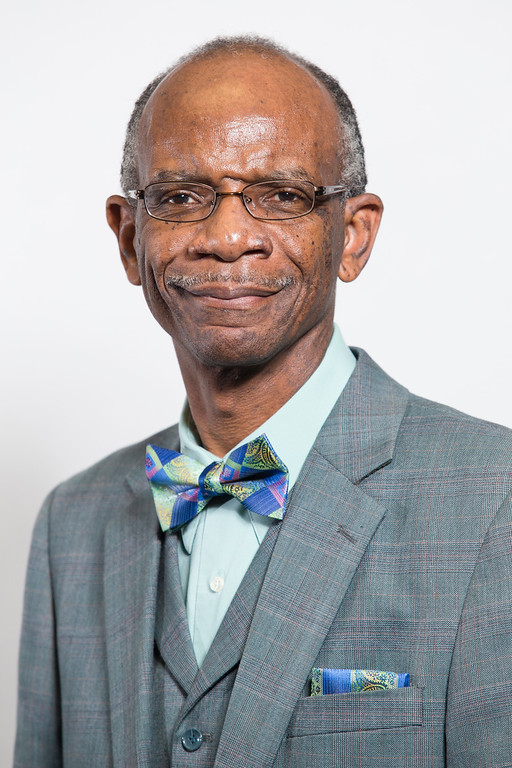
Congratulations to SPC’s Dean of Social and Behavioral Sciences, Dr. Joseph Smiley. He was recently named a Phi Theta Kappa (PTK) Distinguished College Administrator.
Members of SPC’s Eta Nu chapter of Phi Theta Kappa nominated him for the award, which honors administrators who are exceptionally supportive of student success.
“Dr. Smiley has been very supportive of advisors and our chapter in achieving our objectives and maintaining our five-star status, PTK’s highest distinction,” said Dr. Gyldas Ofoulhast-Othamot, political science professor and PTK advisor.
In the award letter, the Phi Theta Kappa president and CEO noted that the award shows his dedication to all students.
“While you were nominated for this award by the highest‐achieving students on your campus, this award is really about your commitment to the success of all students. They know you are working hard to provide them more opportunities and stronger pathways to completion, transfer, and employment. They know you support their learning both inside and outside the classroom, and as a result, they have had a better college experience because of you.”
Smiley, who has worked at SPC for 42 years, says he sees so much value in the PTK organization and the students who are members, that he makes sure that they have everything they need to be successful chapters.
“New minds come to us every year, so we get another chance each year to make an impact during the small time they spent with us,” Smiley said. “That’s what PTK is all about.”
Smiley said that working with students and PTK is a true blessing for him.
“The reality is that working with students is a passion for me, and it blesses my heart when they do well,” he said. “PTK students and advisors represent the best of what this business of teaching and learning is all about. I benefit from working with them, so I’m happy to support the advisors in every way I possibly can. When students do well, we do well. The very image of SPC does well.”
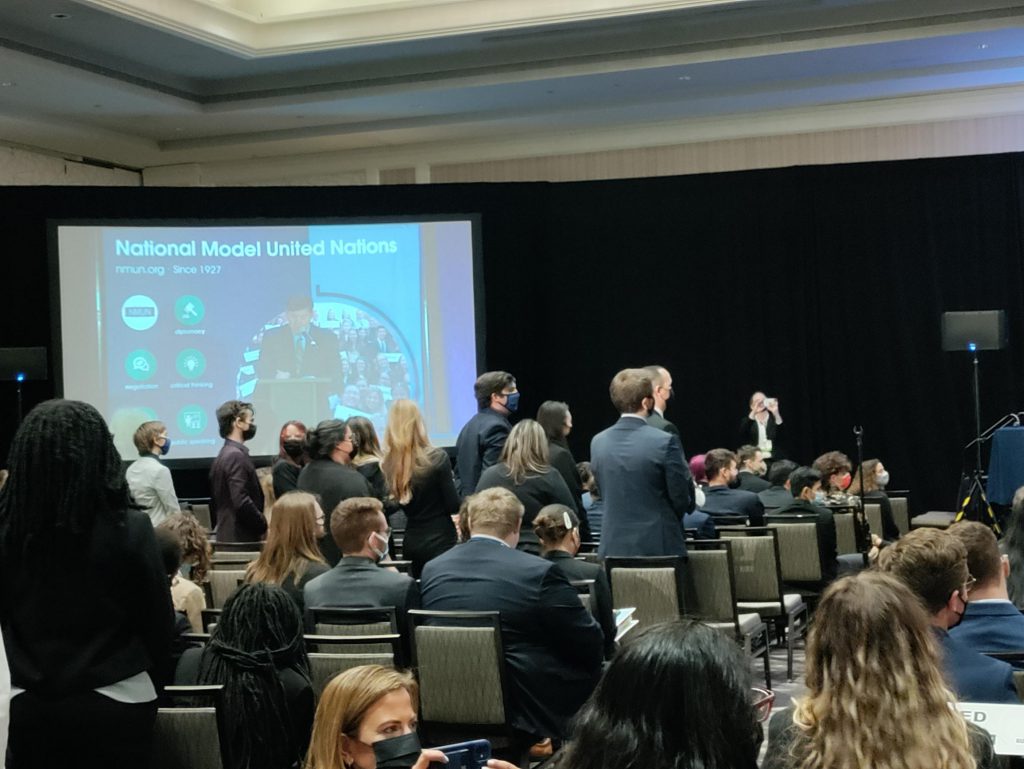
National Model United Nations (NMUN) is the largest and oldest ongoing intercollegiate Model United Nations (MUN) in the world. The organization’s annual NMUN meeting was held November 5-7 in Washington, DC, the first time in nearly two years that an in-person meeting took place. To ensure a safe conference, NMUN-DC required that delegates be vaccinated and wear masks throughout the entire proceedings. The excitement for face-to-face interactions was palpable this year, as attendees from various colleges throughout the nation and from Colombia came together to discuss global issues affecting the planet.
The hard work that SPC Model UN students and faculty put into preparing for NMUN over the last few months paid off. At NMUN-DC, the team was one of a few colleges to receive the top honor of Outstanding Delegation. MUN delegation awards are generally divided into three categories: Honorable Mention Delegation (top 20 percent); Distinguished Delegation (top 10 percent); and Outstanding Delegation (top five percent). All students were thrilled to receive the Outstanding Delegation distinction, even for those few students who attended previous (virtual or in-person) conferences prior to COVID-19.
On top of receiving the Outstanding Delegation honor, two students, Angela Li and Yadira Rivers, were recognized by members of their committee as Outstanding Delegates in Committee. Altogether, the team came back from NMUN-DC fully satisfied to have brilliantly represented SPC. Indeed, one student declared that the 2021 conference exceeded her expectations, as they met amazing people from around the country, considered various perspectives on global issues, problem-solved, collaborated, and learned about the world.
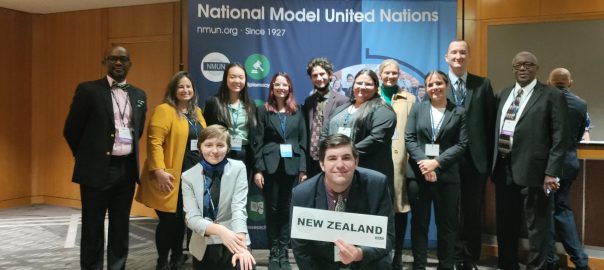
SPC-MUN faculty and NMUN-DC traveling team
SPC Model United Nations faculty is comprised of six professors: Drs. Douglas Rivero (Lead Faculty), Roberto Loureiro, Bledar Prifti, Bill Fleming, Randy Lightfoot, and myself, Gyldas Ofoulhast-Othamot. This year’s conference was led by me, Gibbs Campus advisor, and Dr. Randy Lightfoot, Tarpon Springs. Student attendees included Zhon Butterfield, Yadira Rivers, Felix Nickel, Nile Jordan Nickel, Therese Simoneau, Alyvia Hallock, Angela Li, Duke Panagiotis, Hunter Hise, Alexandria Lanni, and Mia Newsom. Angela Li and Alyvia Hallock served as head delegates for the team. Unfortunately, one student, Caitlyn Pagano, trained with the SPC MUN team, but was unable to attend because of a conflicting schedule.
Contrary to past years when SPC-MUN was able to visit the embassy of the country they were representing, unfortunately, due to the global pandemic, this year’s team could not uphold that tradition. Regardless, before departing for Washington, DC, the team received well-wishes from embassy representatives.
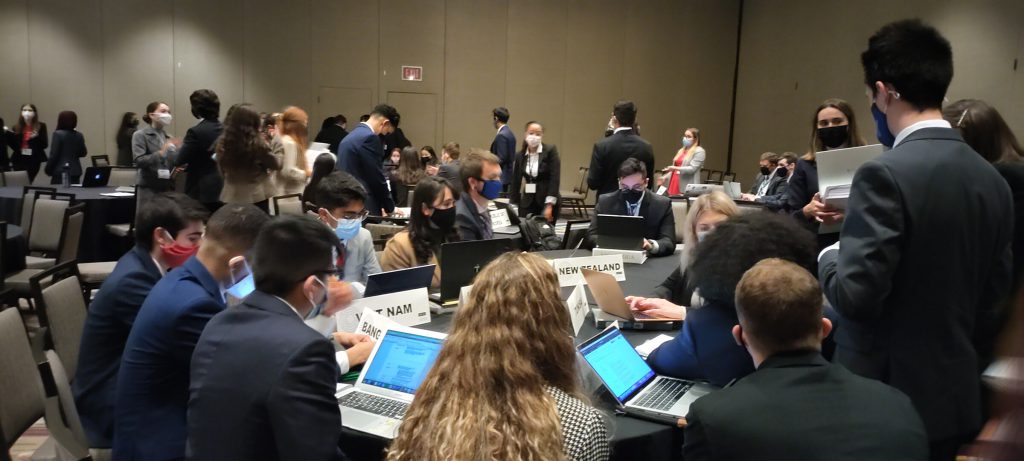
SPC-MUN representing New Zealand in DC
At this year’s conference, SPC-MUN represented the country of New Zealand. Since the fall semester began, students learned about New Zealand and its foreign policy. Under the guidance of the faculty, they simulated their future participation at the conference through various hands-on activities and virtual meetings, including with the University of New Haven’s MUN team. Overall, SPC-MUN team represented New Zealand in the following UN committees: GA 1 (General Assembly-First Committee); GA 3 (General Assembly-Third Committee); HLPF (High Level Political Forum); UNDP (United Nations Development Programme); UNEA (United Nations Environment Assembly); UN Women (United Nations Entity for Gender Equality and the Empowerment of Women).
Some of the topics for discussion that conference delegates tackled included: Eliminating Human Trafficking of Women, Girls, and Gender and Sexual Minorities and The Right to Privacy in the Digital Age (GA3); Gender, Climate, and Security and The Digital Revolution: Implications for Gender Equality and Women’s Rights (UN Women); and Building a Sustainable and Resilient Blue Economy and COVID-19 Recovery: Building Back Better (UNDP).
Next step: New York
The year of SPC-MUN is not yet over. Beginning in January 2022, faculty will start recruiting students for the next MUN conference, which will be held in New York City in April. That conference, NMUN-NY, remains one of the world’s largest MUN conferences. There is no doubt that with the recent reopening of US borders to international travel, delegates from all over the world will be attending.
Finally, it is worth mentioning that the success of SPC-MUN since its inception over a decade ago could not have been possible without the support of the college and Dean Joseph Smiley, as well as the overall campus community. SPC-MUN is looking forward to carrying out the college flag and enhancing SPC’s national and global reputation in future years.
This profile is part of a series celebrating Career and Technical Education (CTE) Month at St. Petersburg College. Be sure to check out the full story to read more about the experiences of SPC students. To explore all of our degrees and credentials, visit spcollege.edu/degrees.
Tanya Glover-Carter, 46, came to Florida in 2015 after she and her husband inherited a home in Clearwater from his late mother. She was pregnant and sober after years of substance abuse and the illness and heartbreak that come with it. In 2016, her husband died in a car accident on the Memorial Causeway Bridge, leaving her a widow and single mom. She soon relapsed and spiraled back into addiction. Three years later, she was sober again and living in a halfway house, when a housemate offered up a dare that would change her life.
“I would wake up early and read my Bible and meditate every day,” Glover-Carter remembered. “My roommate said, ‘You always have your head stuck in a book – you should go back to school!’”
The next day, Glover-Carter, who dropped out of school in ninth grade, eventually earning a General Education Diploma, enrolled in SPC’s Addiction Studies certificate program. Sober now “two years and some change,” she graduates this May.
“I chose Addiction Studies because I’ve been trying to stay clean since I was 18,” she said. “It has been challenging, but I was hell bent to finish because the only things I’d ever finished were a jail sentence and childbirth.”
Glover-Carter wasn’t just challenged by the program. She completed her studies while, at the same time, the widow with a young child was completing probation requirements, taking a two-hour bus ride each way from home to classes, and in the middle of the program, she suffered a stroke. Even with the extraordinary obstacles, she maintained a 3.4 GPA.
Her sponsor encouraged her to join SPC’s Women on the Way, where she says she gained emotional support. She also complimented her professors, who were supportive, and the Financial Aid office, which helped her figure out how to pay for her classes. She also received two scholarships, the Joseph and Vilma Zalupski Endowed Scholarship, and the Florence Cole Bellenger Scholarship.
Glover-Carter said when she finishes in May, she hopes her new credentials, combined with her life experiences, will help her land a job at a treatment center. But she’s not done: She has her eye on SPC’s Community Healthcare Worker Certificate.
“I don’t know what doors God is going to open,” she said, “But now I have a purpose, and it’s a do or die situation, if I’m going to reach my full potential.”