Participating in a wildlife veterinary technician program such as the one in Zimbabwe was an absolute dream come true. The game drives, snare sweeps, deworming, vaccination, feeding, counting, hours spent travelling, monitoring, touring, interacting with the locals, and taking in every moment was more than I had thought was possible during the two weeks spent in Zimbabwe and would absolutely love to go back to help more wildlife. Having the opportunity to speak with local veterinarians to compare medical protocols in Zimbabwe versus America was such an enlightening experience. While this helped me realize how far ahead American veterinary medicine is in comparison, I learned to be grateful for what we have access to in order to help the patients. The difference that access leads to how medicine is performed was a fascinating comparison to be made across multiple conversations. There is one area for improvement that I can think of. Other than the trip being entirely too short, having more access to the two main languages to learn some local language before going would have been helpful. Though we did not need to know the local languages to do administer medicine to the animals, this may have heled with the language barrier between us and the locals. – Arienne , SPC Zimbabwe Vet Tech Program, June 2022
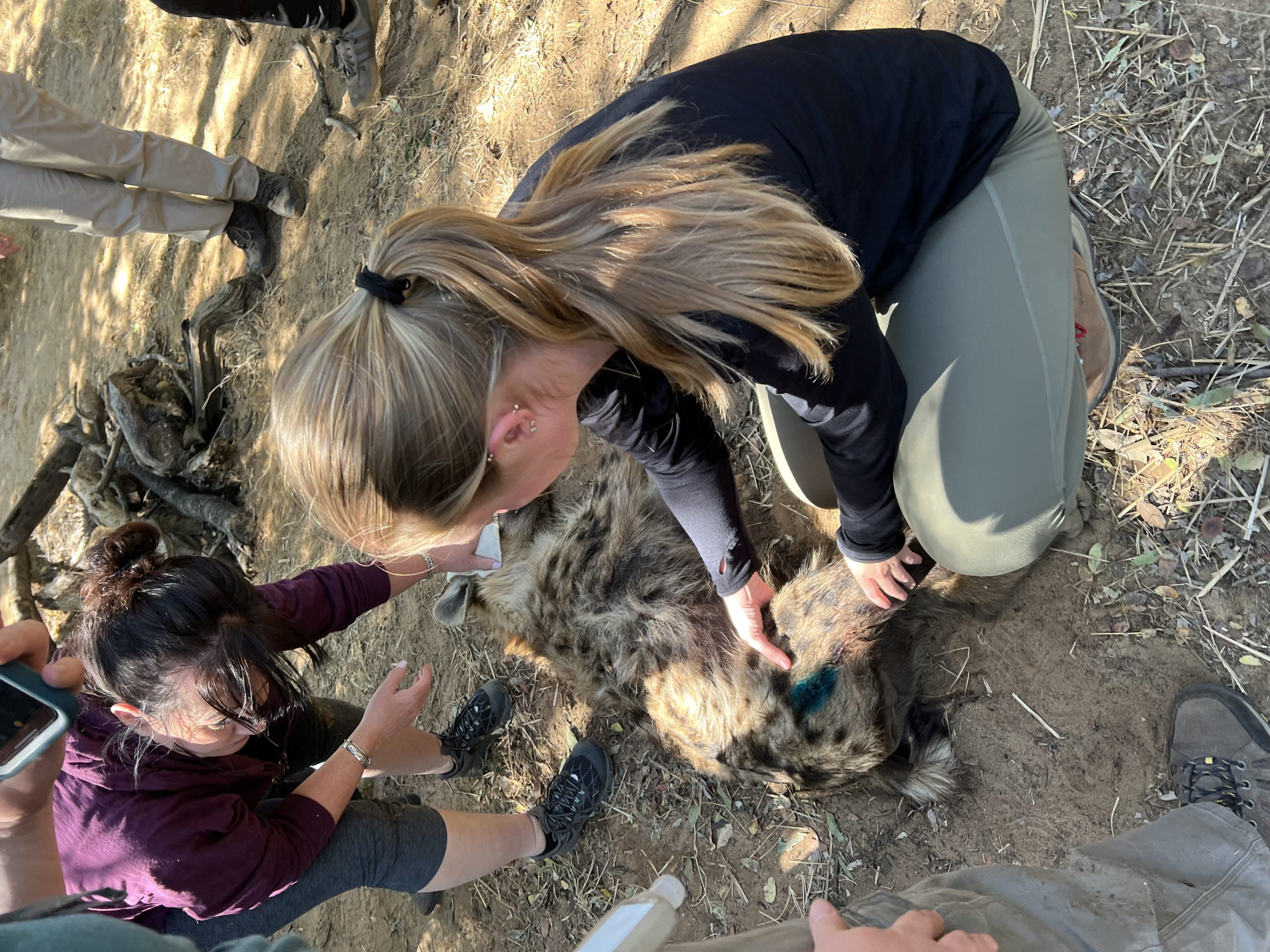
One experience that will always stick with me while on our trip was being able to work on hyenas. The conservation we were staying at had three hyena residents. We were able to help move them to a new enclosure, vaccinate, draw blood and reverse them. Even though not everyone got to do something like pull blood, just being there and working hands on was amazing. We were able to learn things along the way as these are not normal animals we work with in clinics. Learning what their heart rate and respiratory rate parameters should be at and weirdly the female genitalia was interesting to say the least (not something I will forget). Working hands on along side wild animals like that pushed me to realize that going that route in my career is an option and how happy it made me to be a part of that experience. It was a one and a lifetime chance for us to be able to do that and I’m so glad we had the opportunity. Our trip in general and not just the hyenas really changed my mindset and career path options. If anyone gets the chance to do a program like this they definitely should. – Katelyn , SPC Zimbabwe Vet Tech Program, June 2022
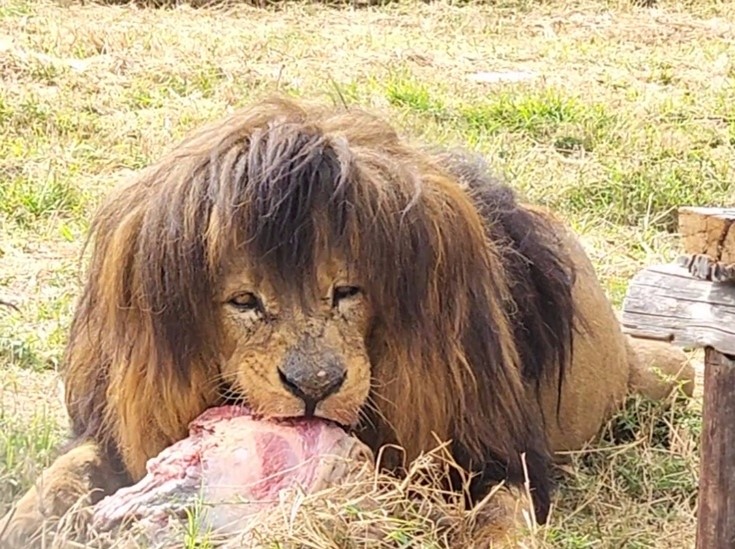
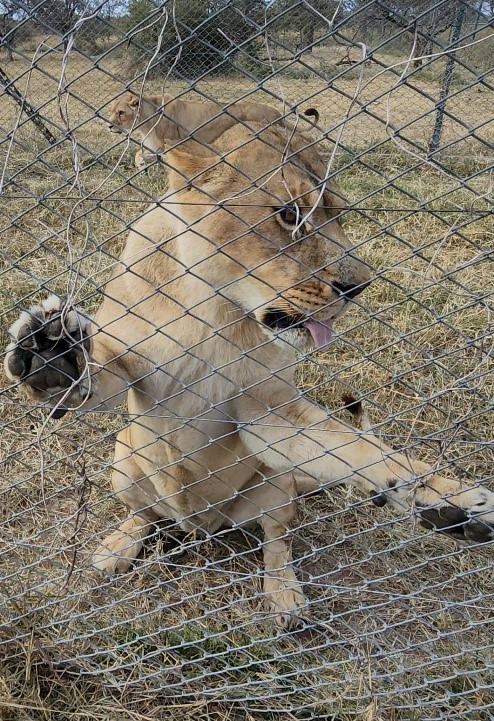
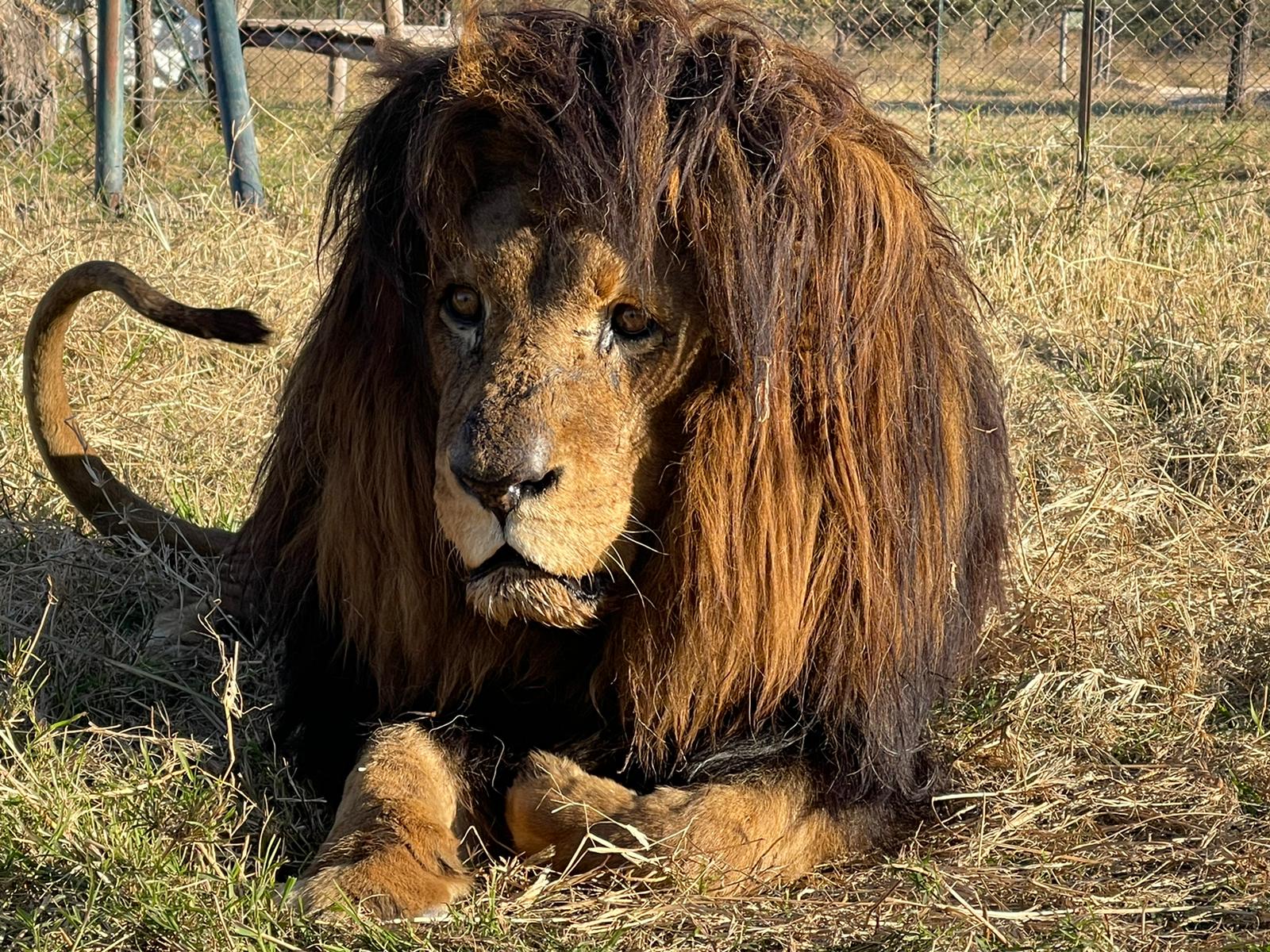
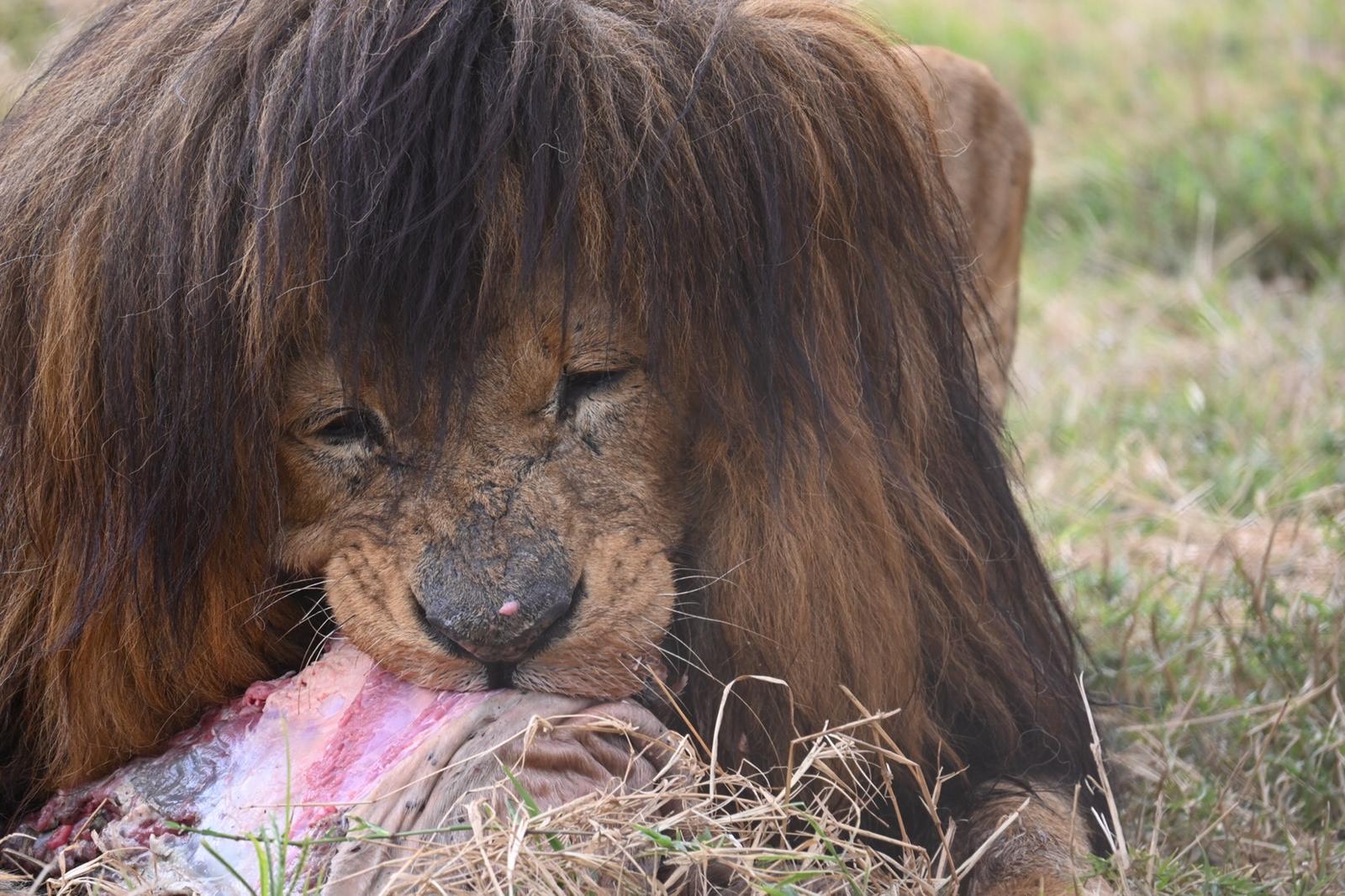
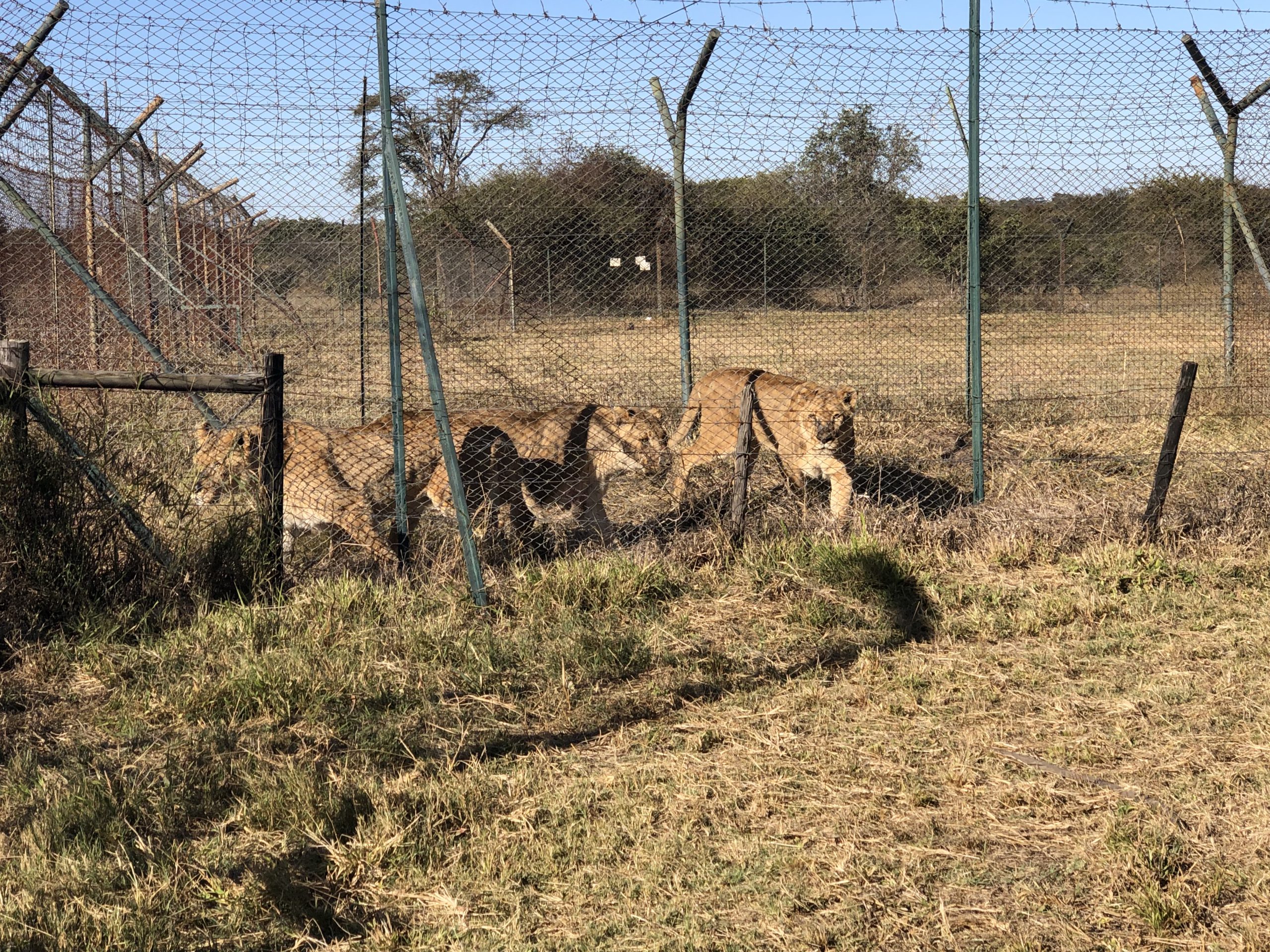
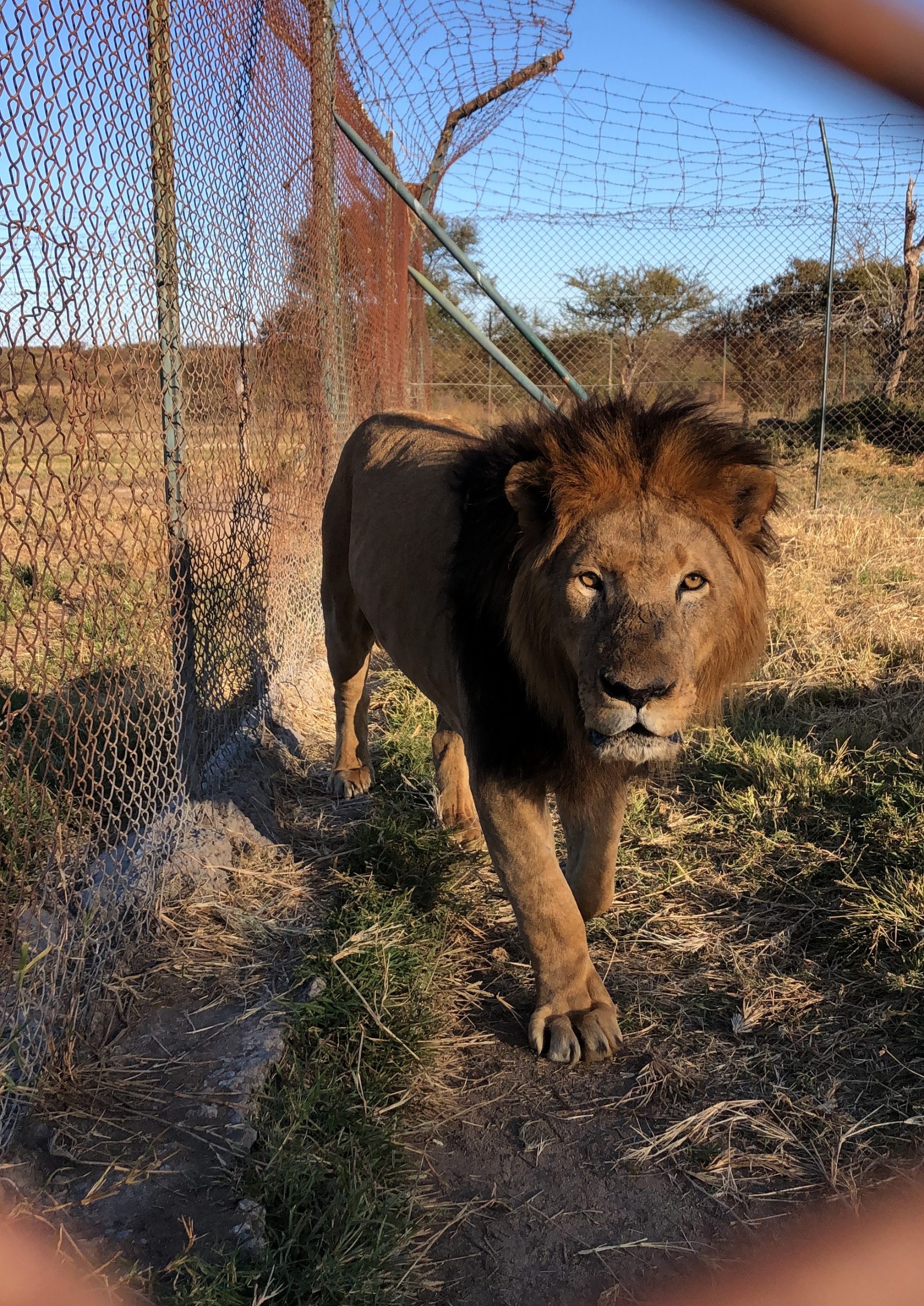
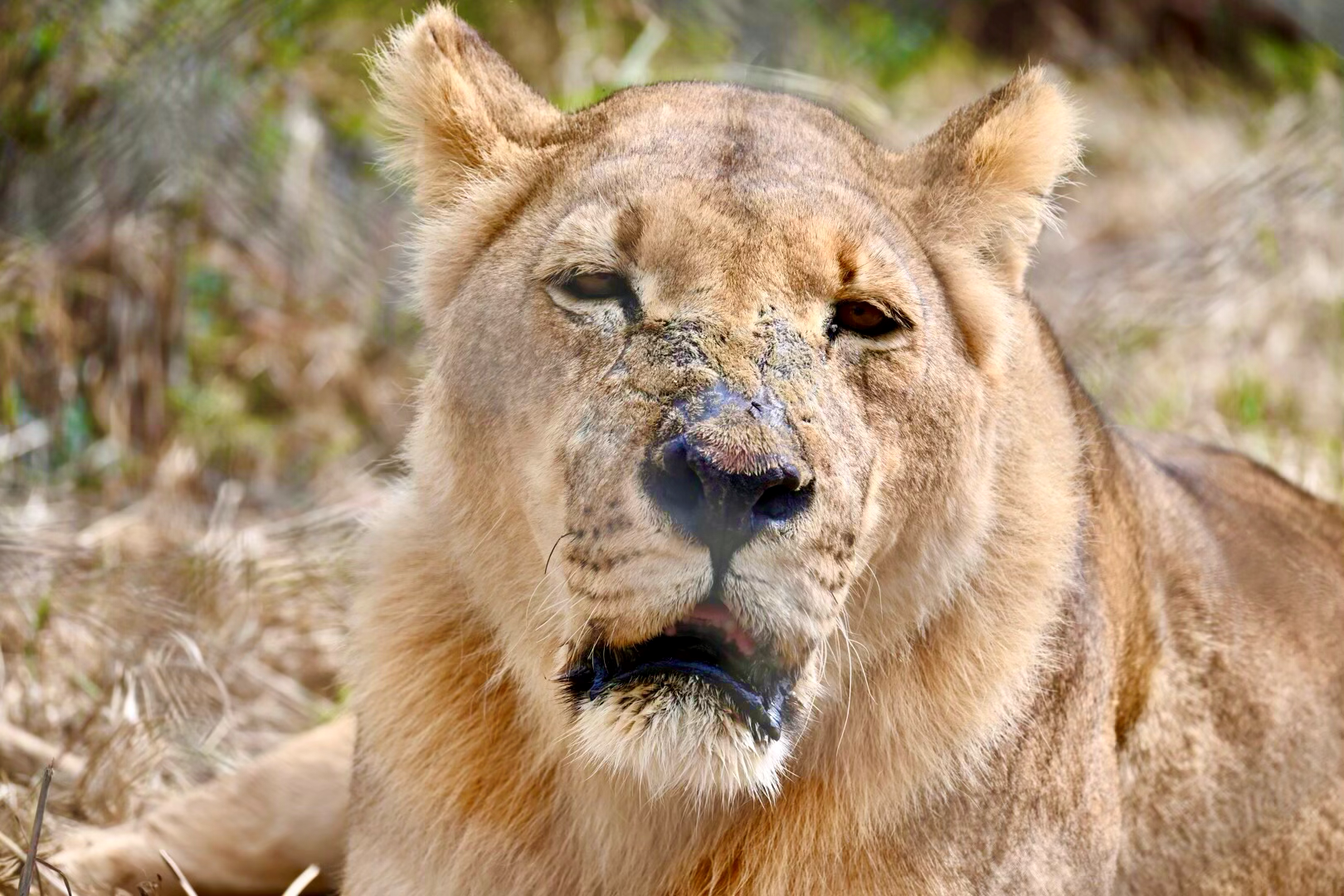
After my two weeks in Zimbabwe I feel like I learned a lot about that animals there and how they are cared for. For this post I will be discussing how they medicate and feed the lions at one of the conservation parks I was at along with some fun facts about them. For the lions, if they need medications they will lace the meat that they are giving them with the desired medication. I got to witness and assist in a deworming feeding where the dewormer was injected into the meat and then fed to the lions with a fence in between. The lioness’ were very aggressive with their feedings and one in particular which was the alpha of the set of lioness’ was very interested in all of the meat and actually ended up with two doses of dewormer rather than the one since she took the one from another lioness. But this was not a concern since the amount that was given was not harmful if they received an extra. Ivermectin was also applied as a drench, to the lioness’ to aid in the control of ticks and extoparasites. This was pulled up in a syringe and the sprayed onto their backs when the opportunity arised. This was difficult since they were suspicious of what we were doing and were not turning around to allow us to spray they backs with the medication. It took multiple tries but eventually we got them all drenched. I also experienced a feeding of male lions which was quite the sight. The me lions when feeding together are very aggressive and will race to the carcass to feed. The alpha male will almost always make it there first and guard the food. The others will get to feed to but most of the time they will run elsewhere to feed. They will even challenge us watching them while they feed since they believe that maybe we will take their food away. The carcass that the conservation park receives is from local farmers that had cattle culled for whatever reason and need it discarded. So the park will go and grab it so that it is used. A fun fact I learned while in Zimbabwe was that male lions do not grow their manes immediately. It takes them 4-5 years to have a full mane of hair. I thought this was interesting since in the movies that was never really explained. As I had mentioned in another post “shumba” is lion in the native language in Zimbabwe. – Amber , SPC Zimbabwe Vet Tech Program, June 2022
Participating in a wildlife veterinary technician program such as the one in Zimbabwe was an absolute dream come true. The game drives, snare sweeps, deworming, vaccination, feeding, counting, hours spent travelling, monitoring, touring, interacting with the locals, and taking in every moment was more than I had thought was possible during the two weeks spent in Zimbabwe and would absolutely love to go back to help more wildlife. Having the opportunity to speak with local veterinarians to compare medical protocols in Zimbabwe versus America was such an enlightening experience. While this helped me realize how far ahead American veterinary medicine is in comparison, I learned to be grateful for what we have access to in order to help the patients. The difference that access leads to how medicine is performed was a fascinating comparison to be made across multiple conversations. There is one area for improvement that I can think of. Other than the trip being entirely too short, having more access to the two main languages to learn some local language before going would have been helpful. Though we did not need to know the local languages to do administer medicine to the animals, this may have heled with the language barrier between us and the locals. – Arienne , SPC Zimbabwe Vet Tech Program, June 2022
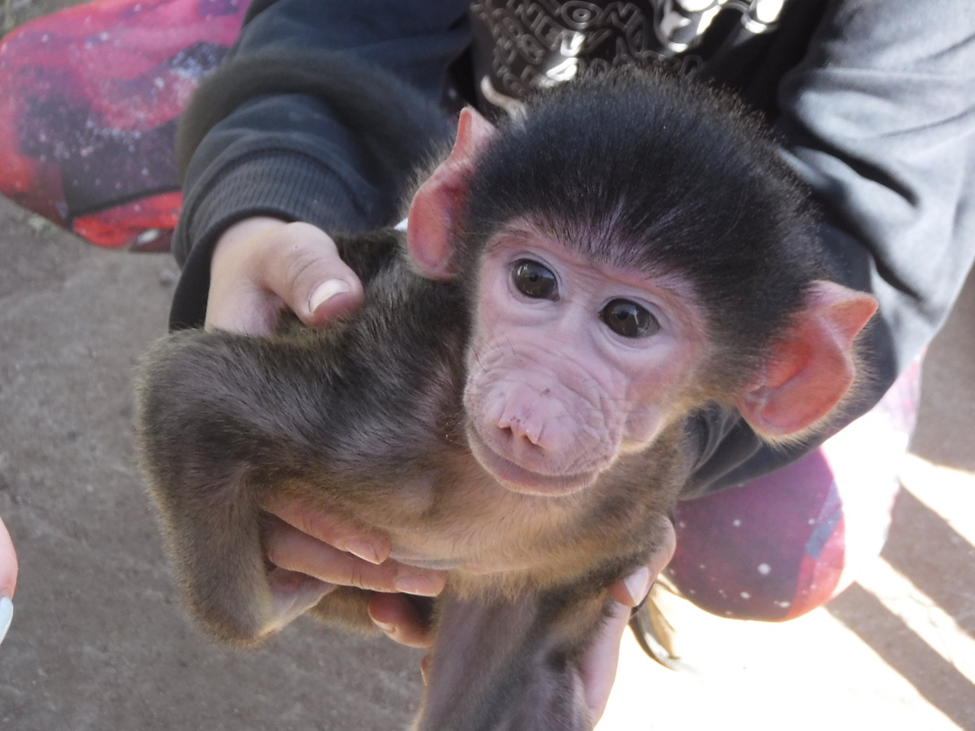
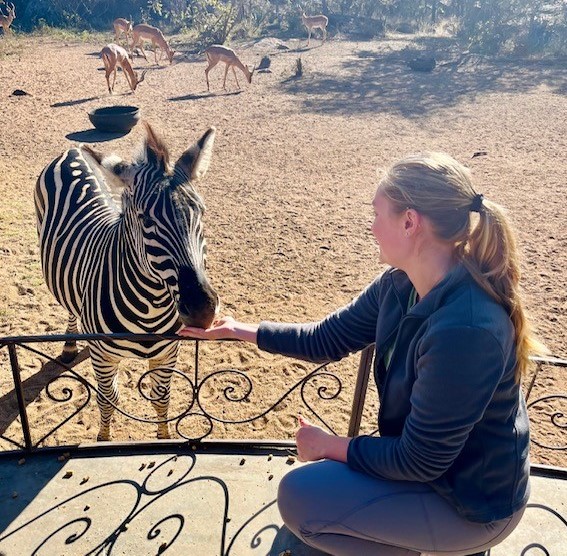
One of the most impactful places we visited during our time in Zimbabwe was a small rehabilitation sanctuary called Free To Be Wild. One of my educational goals is to be a veterinary technician at a zoo or a wildlife sanctuary such as the one we visited. We were given a tour of the place and were able to interact with some of the animals there. Being able to feed zebras, interact with the vulture, listen to their rehabilitation stories was highly inspiring to continue with school to achieve the education required to work in a place such as this one. One of the animals that was particularly fun to interact with was a one-month-old baboon named Bodie whose mother was killed resulting in him being orphaned. One a bit older the sanctuary staff will attempt to introduce Bodie to the troop and hopefully release the troop back into the wild. All of the animals were very well cared for and the passion the employees have for these animals is extremely obvious as evidenced by the enclosures, animal excitement, and gross health exhibited by all of the animals. – Arienne , SPC Zimbabwe Vet Tech Program, June 2022
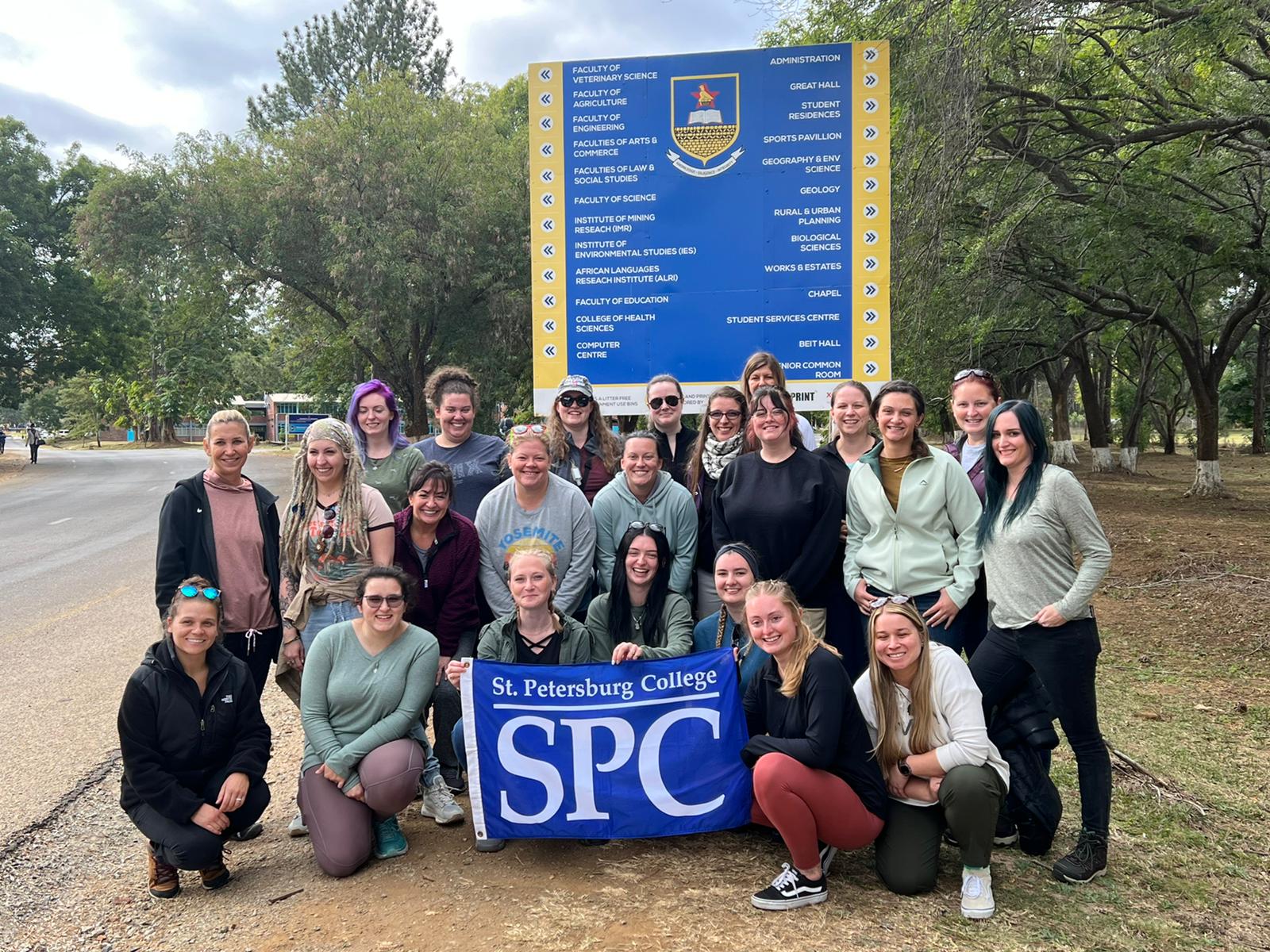
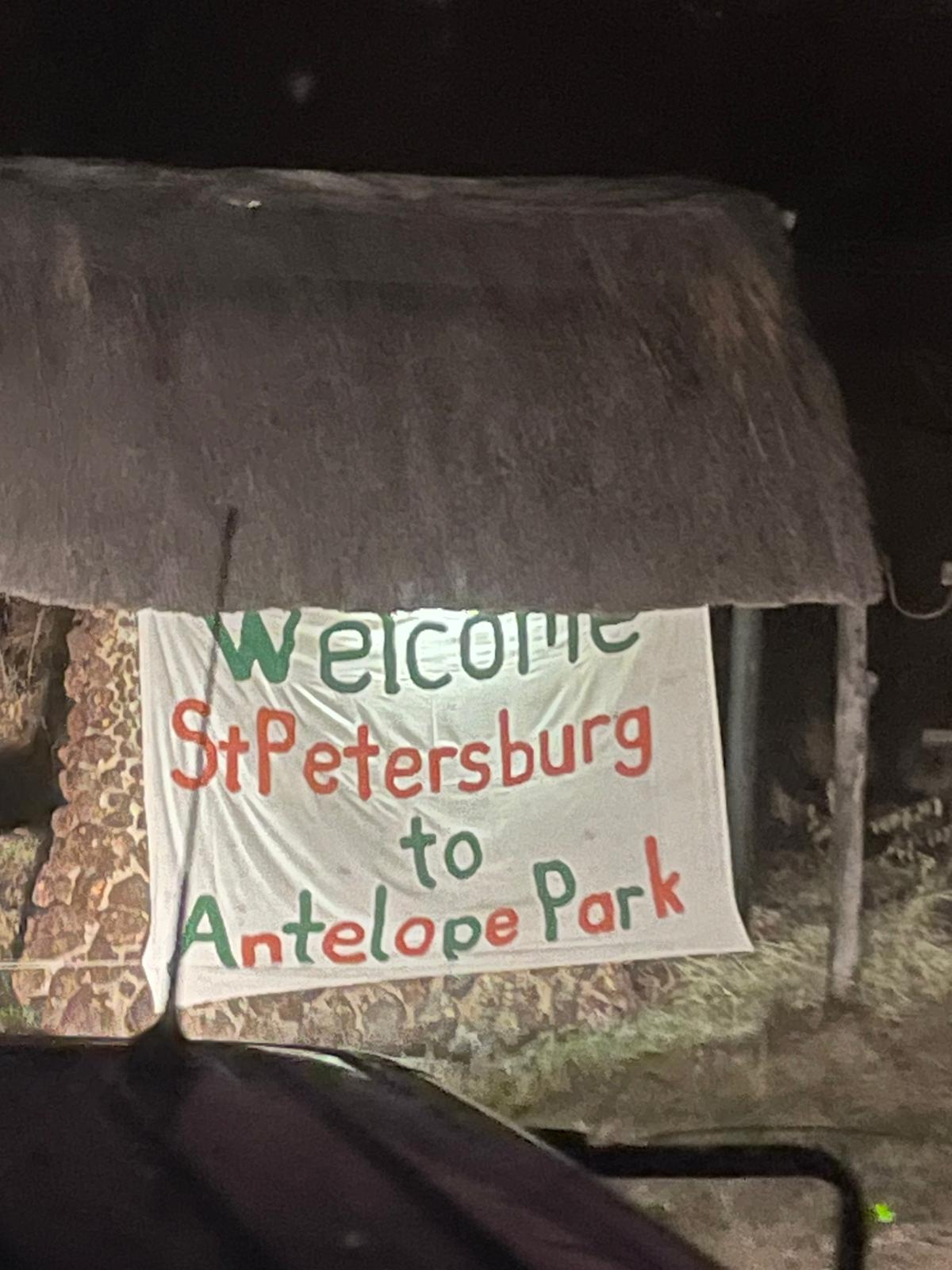
Studying abroad is something I have always wanted to do, what I did not realize was how life changing it could be. Having just returned from a once-in-a-lifetime journey through Zimbabwe, I know realize how important having the opportunity to study abroad can be for students of all ages. Our journey through Zimbabwe with the amazing team at EDU Africa started in Zimbabwe where we had out initial briefing on the history of Zimbabwe and the culture that we would experience over the next 2 weeks. A tour through the local veterinary school was eye opening to see how a country that has such few resources compared to what we see in the states, is able to provide the best care they can for their animals while learning how to improve their practices. We meet such amazing people along the way from the passionate people working at the conservations at Antelope Park and organizations like ALERT, to privately owned camps like Iganyana. While they may have different goals or plans, each group that we met was working to contribute to conservation efforts in their own way.
Not only did we get to have up close encounters with local wildlife, we also had many opportunities to sit down with local professionals who were able to explain in detail how their organizations are contributing to their society in addition to the conservation efforts. While the most exciting parts of the trip for me including feeding the elephants and drawing blood from a hyena, I came away from this trip with much more than some cool photos (although I do have plenty of them). This journey allowed me to learn about a culture that is different from ours in many ways, but still has people who are just as passionate about animal care and welfare as we are here. The work that these groups put in to not only protecting local wildlife and endangered species, but also to ensure the inclusion and safety of local villages was absolutely remarkable to witness. I am so thankful to the professors at SPC as well as our guides from EDU Africa for taking me along on the amazing adventure that I will never forget! – Megan , SPC Zimbabwe Vet Tech Program, June 2022
This country has so much to offer from its food, culture, and wildlife. The beauty of Zimbabwe is all the above. The people are some of the kindest most generous you will ever meet. Their passion for what they truly care and believe in is expressed in every way. A big lesson learned on this journey was that while we all dislike the term poaching, for some it is the only they can feed their families due to the poor economic conditions in Zimbabwe. This however means that techniques used by locals to “hunt” is what is called a snare trap and is truly a terrible way for any animal to die.
The experience at Antelope Park will never be forgotten. From caring for the lions, including cleaning their enclosure, deworming them, giving them a dip bath (topical treatment for tick prevention) watching the feeding frenzy. To the elephants and feeding and walking with them to their favorite spot to eat. We watched in awe the elephants had so much trust in their handlers. To horseback riding in park. Every single discussion from the staff members at Antelope Park had so much meaning from the about everything the park stands for and each one’s role in conservation efforts. The lecture from Dr. G. Campling and her dedication to protect all species and her recent journey to Ukraine to assist with the lions at the zoo who needed to be transported to a safer location. There is so much more to Veterinary medicine.
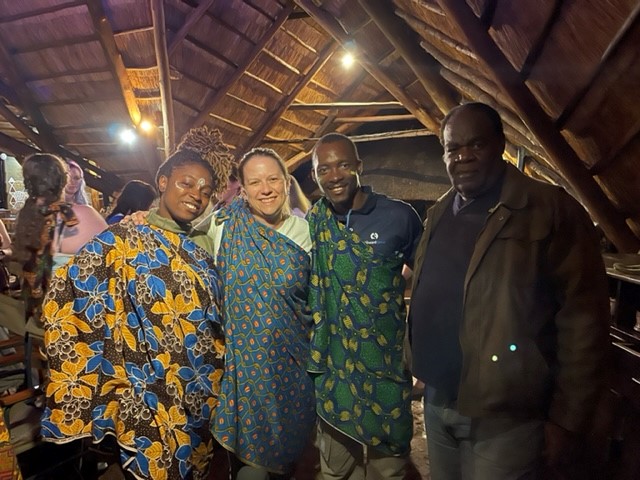
I appreciate the discussions by Paul and Teri at Iganyana Tented Camp. They went above and beyond to make our experience incredible. Teaching us various animal tracks along with going into detail about the type of conservation work that they strive for. The tour of Zimbabwe Veterinary School. While Zimbabwe doesn’t have access to the newest and greatest equipment you can hear and see after speaking to the students who attend their goal is to care, treat and protect animals. They use what they have access to, to make veterinary medicine work. I have met so many great people on this adventure from our team in Zimbabwe (Tapps, Yami, Teddy and Barry who welcomed us all to his home and cooked us an amazing barbecue) along with my fellow students and faculty I consider all of you family. We will forever laugh about the toilet paper situation, my giant backpack, the monkey who ate snacks in the other cabin at Antelope Park and the Mopane worm eating at the Boma Dinner. – Candace , SPC Zimbabwe Vet Tech Program, June 2022
While in Africa, one of the things I have been most struck by is the people that work in some of the places we have visited so far. At this point in our trip we have visited the University of Zimbabwe Veterinary School, the Makara cattle farm, Antelope Park, Free to Be Wild, and Iganyana tent camp along with Hwange National Park.
While the animals are astounding and seeing them has changed my life, the people who work with and for them have been incredible. Not only our guides like Sam and Iri, but the people who have been so kind to cook for us and take care of the parks. Everyone cares so deeply about what they are a part of in terms of conservation and is willing to share their passion with anyone. The guides who took their time to introduce us to their elephants, lions and cattle took great pride in them and that was very evident. When I say “their” these men spend so much time with them and know every intimate detail about them physically and behaviorally, these animals might as well be their children. They wanted to make sure they could provide us with all the knowledge they could to help us respect, understand and want to take care of these animals and their environment!
At Iganyana Tent Camp, Terry and his staff want so badly to take care of the wildlife and environment in Hwange. They want to improve their facility to invite all walks of life to the camp in order to spread the message that they are trying to deliver.
So much concentration on conservation it was very heartwarming!! – Jennifer, SPC Zimbabwe Vet Tech Program, June 2022
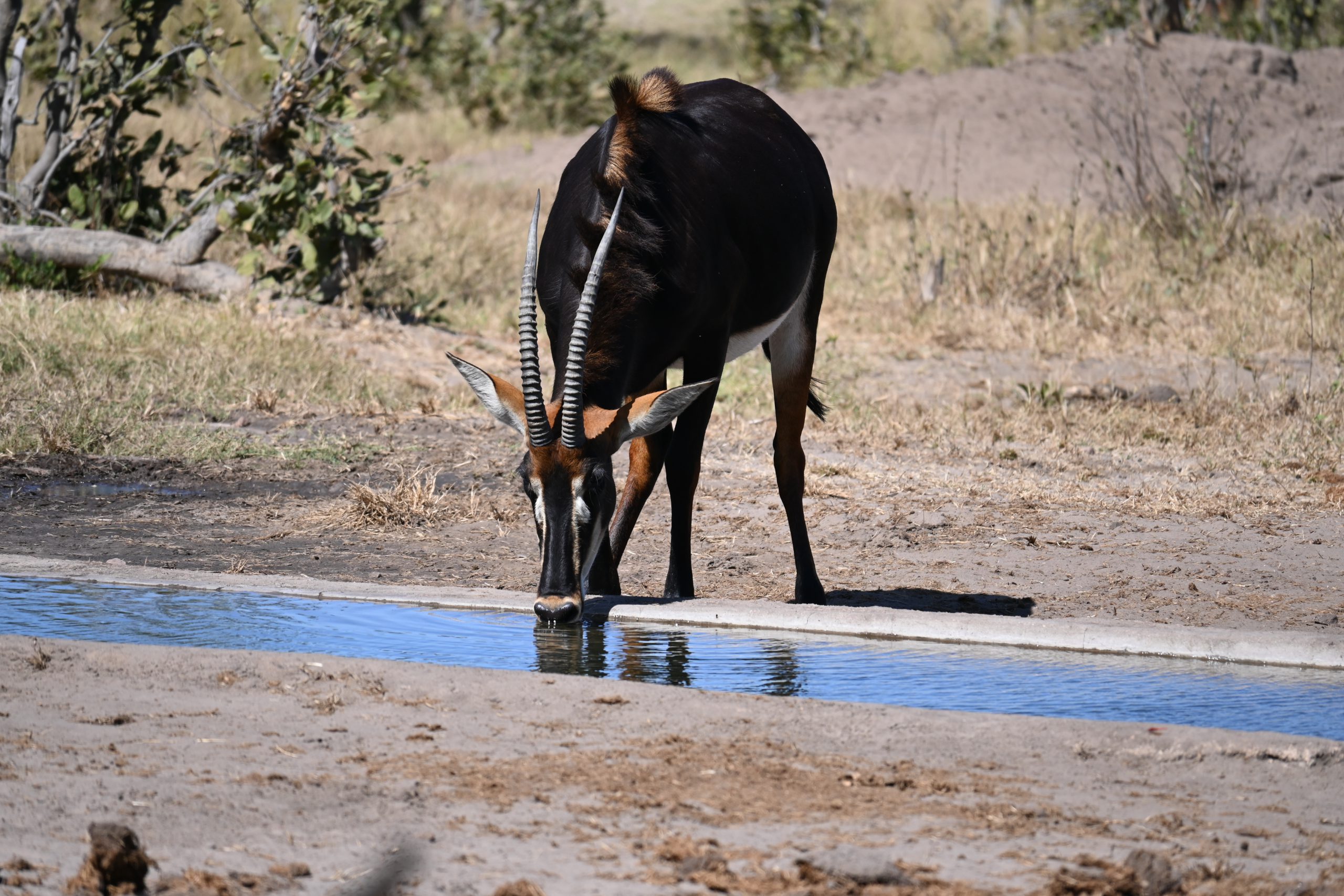
I did not know what to expect when I applied to study abroad in Zimbabwe. I was hoping the trip would give me experience with different animals to help prepare me for my career as a Certified Veterinary Technician, but nothing could have prepared me for the life changing experience the study abroad trip became for me. The trip began with a long flight from Tampa (Florida) to the capital of Zimbabwe. I was expecting a dangerous area, food I may not like, and to have an opportunity to view animals in the areas we were going to visit. My view changed drastically by the end of the trip! I was greeted by the friendliest of people at every turn! At one location, we were greeted with people playing drums and dancing to welcome us. Not only that, but every meal was four courses and dessert was served at lunch and dinner! The food was not only edible, it was delicious! From chicken to steak, every meal went beyond my expectations. Yet what truly blew me away was experiencing the wildlife in Africa. At a reservation called Antelope Park, we were given the unique opportunity to observe male lions run at full gallop and compete over their prey. It built a sense of fear and respect that is difficult to describe. As they roared and wrestled and leapt at the gate, it became clear to me that these animals deserve a great deal of respect. However, my involvement with the wildlife did not end there. We were also given opportunities to observe and interact with elephants. We saw crocodiles, water buffalo, giraffe, kudu, sable, impala, mongoose, monkeys, and baboons… just to name a few! We were able to assist in the sedation and relocation of a group of hyenas as well as to deworm a pride of lions. We listened to lectures that taught us about conservation tactics and efforts to stop poaching. We were even able to participate in a bush walk to search for snares, which poachers use to trap and kill protected wildlife. We found and removed one, saving an animal from a terrible fate. The study abroad trip broadened my view of different cultures and values. I never could have predicted that trip would become a defining event in my life path. Not only was this trip an amazing experience, but it gave me experience to further my career in the veterinary industry as I now seek to work with exotic and endangered species to assist in conservation efforts across the world. – Valerie, SPC Zimbabwe Vet Tech Program, June 2022
I never imagined in my wildest dreams how much this trip was going to change my life. The country of Zimbabwe has such immense beauty in not only the nature and animals, but with the people that live there too. The two facilitators, Yami and Taps were incredible people and I felt instantly at home with them. Getting to know them both was an honor and I hope to keep in touch. They organized experiences for us that were once in a lifetime encounters that I will treasure for the rest of my life. I had the opportunity to provide preventative healthcare to lions, hyenas, and horses and helped in the anti-poaching efforts of the local conservation experts. I still can’t believe how much we were able to do in such a short time. We learned so much about the country, the animals, the land, and the people that call this amazing place home. The friendliness and passion of the people is overwhelming and welcoming, and I constantly found myself wanting to know more about every person I met.
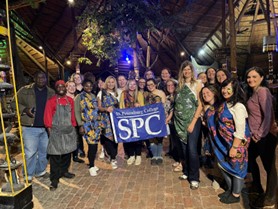
Coming home, I hope to continue what I have learned and I hope that I can show my friends and family just how amazing Zimbabwe is. Being a part of the study abroad program makes me want to enroll in classes all over again so that I can continue to be eligible to join these programs. Every student should have the opportunity to do these trips because they are rich with knowledge that is impossible to learn in a classroom and they are the best, most life changing experience that will shape young adults into better, more compassionate people. Thank you SPC for creating such a unique educational experience! – Jennifer , SPC Zimbabwe Vet Tech Program, June 2022
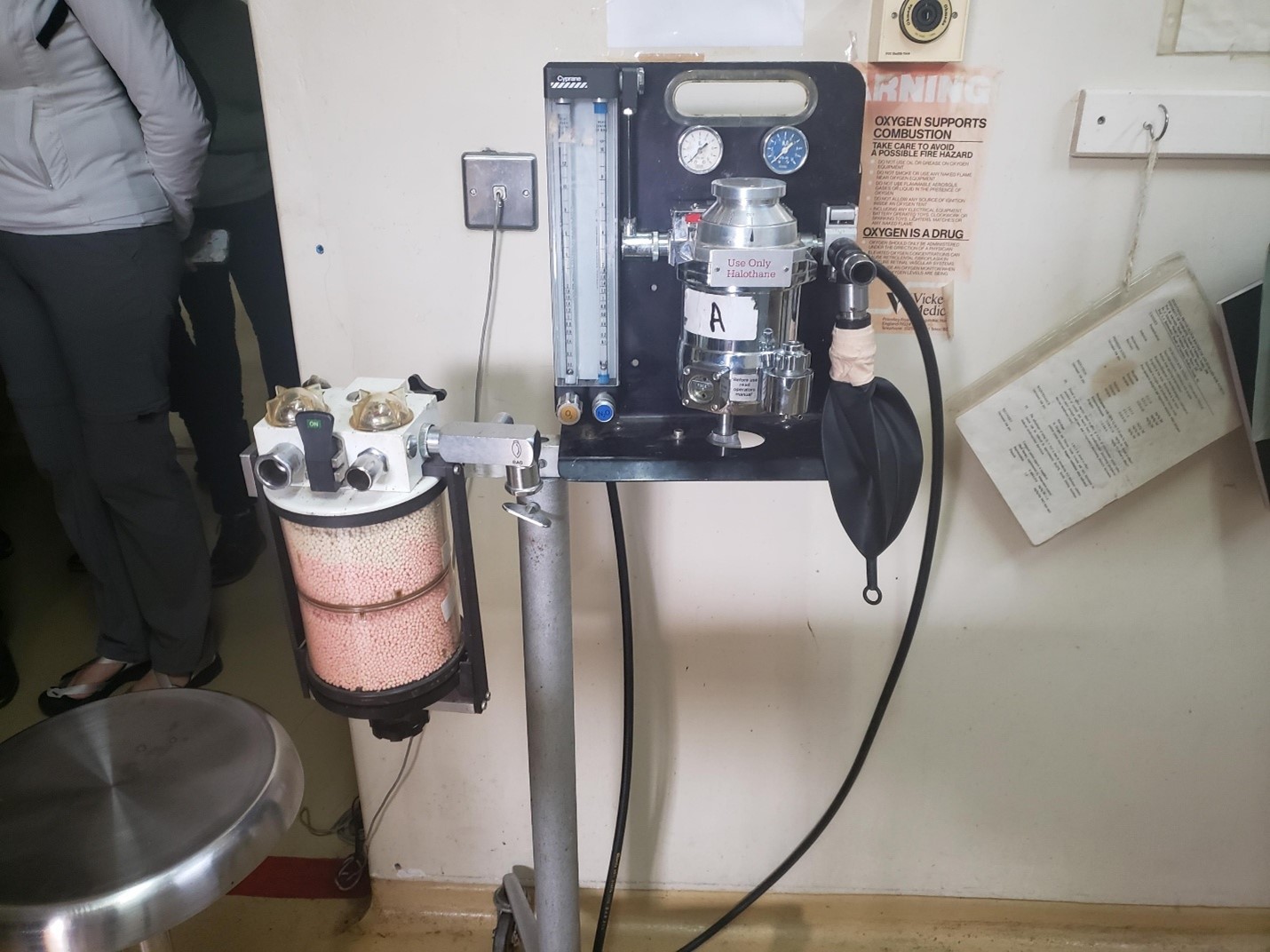
We are half way through our study abroad trip in Zimbabwe. We have seen and experienced a vast amount of things so far. During the beginning, we visited one of the Veterinary Universities in the country, the University of Zimbabwe. Here we got to see how the veterinary students learn and what they have available for them to accomplish this. The classrooms are very minimalistic, the labs have sufficient equipment. One thing that stood out for me was the surgical area. They are still using halothane for general anesthesia, the soda lime is way past expiration. There are no monitoring systems, everything is manual, and they will only check a blood pressure under anesthesia if it is a longer procedure. Everything is done manually. There are spiders in every room, including the surgical theater. Seeing the differences in protocols are interesting and shows how far advance we are in America.
We than continued on to a cattle farm, where we met one of the veterinarians that are in the area. Now the amount of veterinarians that are available to farmers are limited depending on where the farm is located. They could be 4-6 hours away. The diseases that are present are similar to that in America. They do have blue ticks though, which have not yet reached the states . It was interesting to learn about which diseases they see more of and the medications that are used, which is similar and/or exactly what we use. Foot and mouth is still very present as well as anthrax. – Alicia , SPC Zimbabwe Vet Tech Program, June 2022
I have had so many wonderful experiences on this trip. The most amazing experience so far would be the care that Antelope Park staff have for their animals and and conservation efforts. I am not sure I have seen a group of individuals come together for so much care and love for something they are so passionate to teach and protect. I have had an amazing time here in Zimbabwe and am grateful for the opportunity and enlightenment this trip has taught me. – Candace , SPC Zimbabwe Vet Tech Program, June 2022
Upon arriving to Zimbabwe, I was not sure what to expect. I had prepared for a dangerous area, food I may not like, and to be petting animals in the areas we were going to visit. My view changed drastically midway through the trip. I was greeted by the most friendly people at every turn. At one location, we were greeted by people playing drums and dancing as a welcome. Not only that, but every meal was four courses and dessert was served at lunch and dinner. The food was not only edible, it was delicious! From chicken to steak, every meal went beyond my expectations. Finally, watching the male lions run at full gallop and compete over their prey built a sense of fear and respect that is difficult to describe. As they roared and wrestled and leapt at the gate, it became clear to me that these animals are meant to be be respected, not pet! Though the trip is far from over and there are many more experiences to come, I have already had my view of Zimbabwe shaped into something new as I learn more about the country, animals, and culture. – Valerie , SPC Zimbabwe Vet Tech Program, June 2022
“Wildlife Conservation has had a grip on my heart since I was a child. I have always deeply enjoyed learning as much as I possibly could. So, this trip was the epitome of everything I have ever dreamed of. I did so much research and was eager to be able to experience what I have learned about veterinary medicine and wildlife conservation first-hand. I became quite biased in my opinion on how I felt wildlife should be preserved.
Based on my experiences here, I found I was wrong.
I always thought that poachers were the scum of the earth. I always believed that culling or trophy hunting “healthy” animals was blatantly wrong. To an extent, I still hold belief in both of these concepts. However, I have been able to have in depth conversations with locals, conservationists, and veterinarians about conservation and I have found it to be so grey.
For instance, poachers who use snares to catch animals are often trying to catch animals in order to feed their family. While it is an incredibly cruel way for an animal (intended target or not) to die, I understand that the individual is trying to feed their family by any means necessary. This is why most people only get a stern warning for setting snares despite their devastating consequences.
We were lucky enough to find one snare during our sweep at Antelope Park. We then were able to do a practice snare sweep to get a better feel for how they look at Iganyana, They were practically invisible, but I was able to find two once I learned to scan the tree bases for anything that looked similar to vines.
Afterwards, we stopped by the Painted Dog Sanctuary where we attended a lecture about the story of “Eyespot”, a Painted Dog that they were monitoring, who eventually succumbed to poaching via a snare. The speaker mentioned that they find 80+ snares a day on their sweeps and, instead of throwing them away, they model them into the animals that may have lost their lives to the snare. I bought one of a beautiful Painted Dog pictured below. I loved the idea of something so ugly being repurposed into something so beautiful.” – Bailey , SPC Zimbabwe Vet Tech Program, June 2022
A picture speaks a 1,000 words but a memory… an experience speaks a million. One of the most amazing experiences we’ve had thus far was our encounter with the lions/ lionesses (in Africa a lion is called Shumba) and learning about the program in antelope park. In Africa, a prominent problem stems from ticks and the many diseases they pass. Thus we gave lions flea/tick protectant (spot on) and dewormed them with ivermectin injected into meat and fed the meat to the lions. With the spot on we had to shoot the liquid onto their back via a syringe, so we had to distract them with meat and have them turn their backs to us which was rather difficult with how aggressive they are. We also observed lion feeding happening. The most interesting portion is they will lay on food and defend it as a dominance thing rather then because they are actually hungry. This can go on for hours and the weaker ones would just have to wait it out. It was amazing seeing wild lions and learning how truly aggressive they can be despite their cute cuddly appearance. Learning about the lion program in antelope park was also fascinating and the phases they are initiating to be able to release lions back into the wild. Phase one consisted of breeding. Once they had enough lions/lionesses they gave contraception’s to the lionesses; however this can only be used 3 times as it can cause reproductive issues in the future. Because of this, they have separated the lions and lionesses. Phase two consists of finding a preserve that has enough hunter to prey ratio which they are currently working on. Phase three then involves release the cubs (once they are old enough) of the phase 2 lions/ lionesses into the wild since these ones won’t have any human interaction. – Linda, SPC Zimbabwe Vet Tech Program, June 2022
On Friday June 10th 2022, we went to learn about the lions that are cared for by the staff of Antelope Park. We drove down to their enclosures on the right side of the park and our plan was to give them their dewormers and apply topical tick prevention. On the way, we learned that the previous owners of the park used to do “lion walks” with the lions in captivity to try to give them the chance to learn how to hunt and how to live in the wild. Since then, the goal has been to prepare the lions in a way to be released back into the wild so each new generation of lions would have less human contact in order to get them more used to living on their own. This would also help reduce human wildlife conflict as they would avoid hunting too close to human populations once released.
Unfortunately, the secondary location to be used for the next generation of lion-raised cubs has not been found yet so the staff at Antelope park has not been able to start this transition. Due to this delay, staff initially tried using injectable contraceptives for the female lions to avoid pregnancies but that was making the female lions sterile and unable to reproduce after just a few injections. As of now, the lions are kept separately (males in one enclosure and females in the other) so that they cannot reproduce until the staff at Antelope Park are ready to transition into their next phase of release.
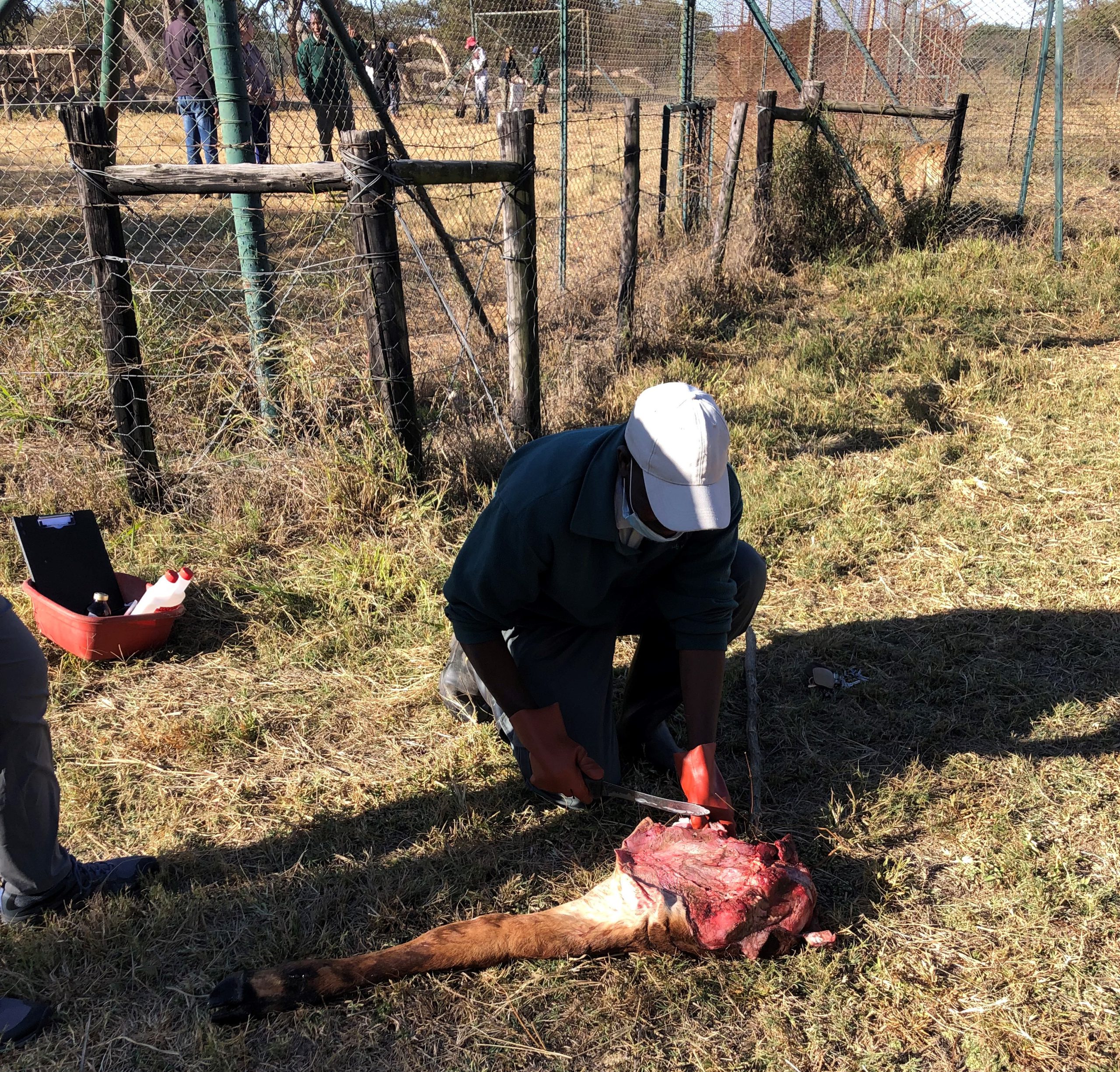
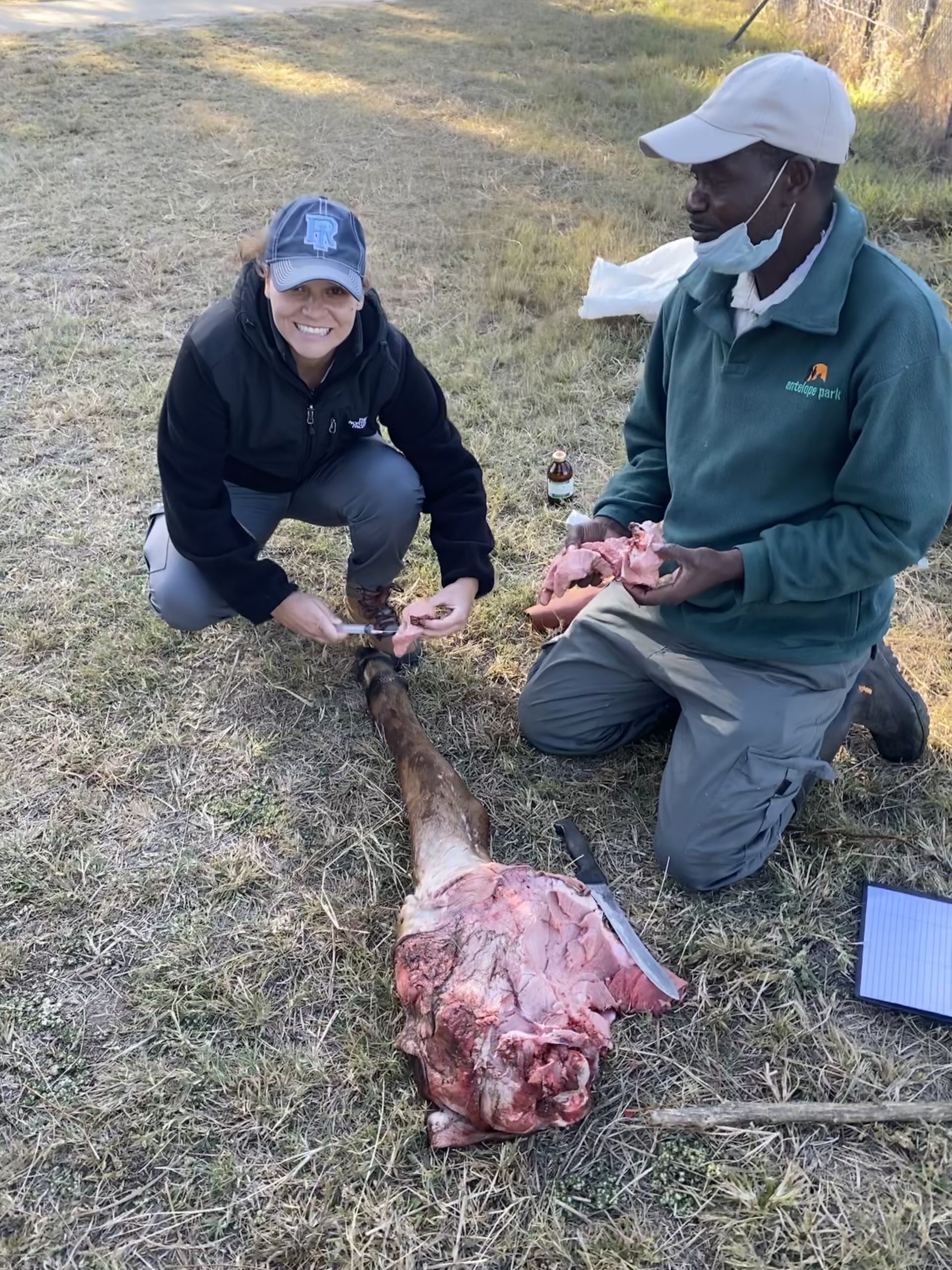
Once at the enclosures, we retrieved some stored meat (cow leg) and our dewormer/prevention supplies. We went to an enclosure with 3 female lions who were separated into a smaller “holding” enclosure on the side and our guide cut some meat off the cow leg. We then used a needle and syringe to draw up the dewormer (ivermectin) and injected it into each piece of meat (1 dose per lioness). Once the medication was injected into the pieces of meat, each lioness was given an individual piece through the fence and all received their dewormers. After that, we cut some more meat off the cow leg to use when applying the topical tick prevention (spot-on). The meat was used as a distracting treat to keep the lionesses by the fence and while they were trying to take it, someone else would take the syringe of tick prevention, put it through the fence, push on the plunger, and spray the preventative on the shoulders/back of the lionesses. Once all the lionesses were given their meds, we moved on to an enclosure with 2 male lions and did the same procedures with them. Also, during the time we were working with giving medications, other staff and volunteers were cleaning the enclosures for those particular lions (picking up stool and leftover pieces of meat/bone).” – Kimberly, SPC Zimbabwe Vet Tech Program, June 2022
Being a part of the study abroad program was a life changing experience. There have been so many aspects of this trip that have pushed me out of my comfort zone and I am coming away with a strong sense of accomplishment for facing my fears and pushing forward to experience new things. Spending the night in different places, with people I don’t know, and many insects that I’m afraid of are just a few things that I have overcome. Walking through the thick grass out in the bush doing snare sweeps was extremely out of my comfort zone because of my fear of spiders and snakes, but I found myself enjoying the activity immensely because I was doing something important that could save the lives of the animals that the park were trying to protect. I am learning so much about not only the local people, but about myself too and what I am capable of doing. I am coming home from this trip feeling like a new person with a greater respect for the differences between cultures and people. Each day the activities we get to experience are getting better and better, and the amount of knowledge that I will be bringing home will be applied to all aspects of my life. – Jennifer , SPC Zimbabwe Vet Tech Program, June 2022
The trip to Zimbabwe was everything I could of ever imagined plus more. I have always wanted to go to the continent of Africa since I was a little girl, so seeing first hand the wildlife here was incredible. While in Africa after visiting Antelope park it was clear to me how important the conservation of all these different species is and how important a role each of them play in the ecosystem. Prior to going to Zimbabwe I always thought lions were adorable animals, but after being here and working with the lions it became clear to me that these are predatory animals who would not hesitate to kill me, which is what lions are meant to do. During one of the lectures one of our guides told us the lion population had been steadily decreasing since the 1980s due to various reasons. Antelope park has been conducting a project to try and save the lion population. The individuals there I felt cared so much about the park and truly loved what they were doing with the animals which is all you could ever want in life.
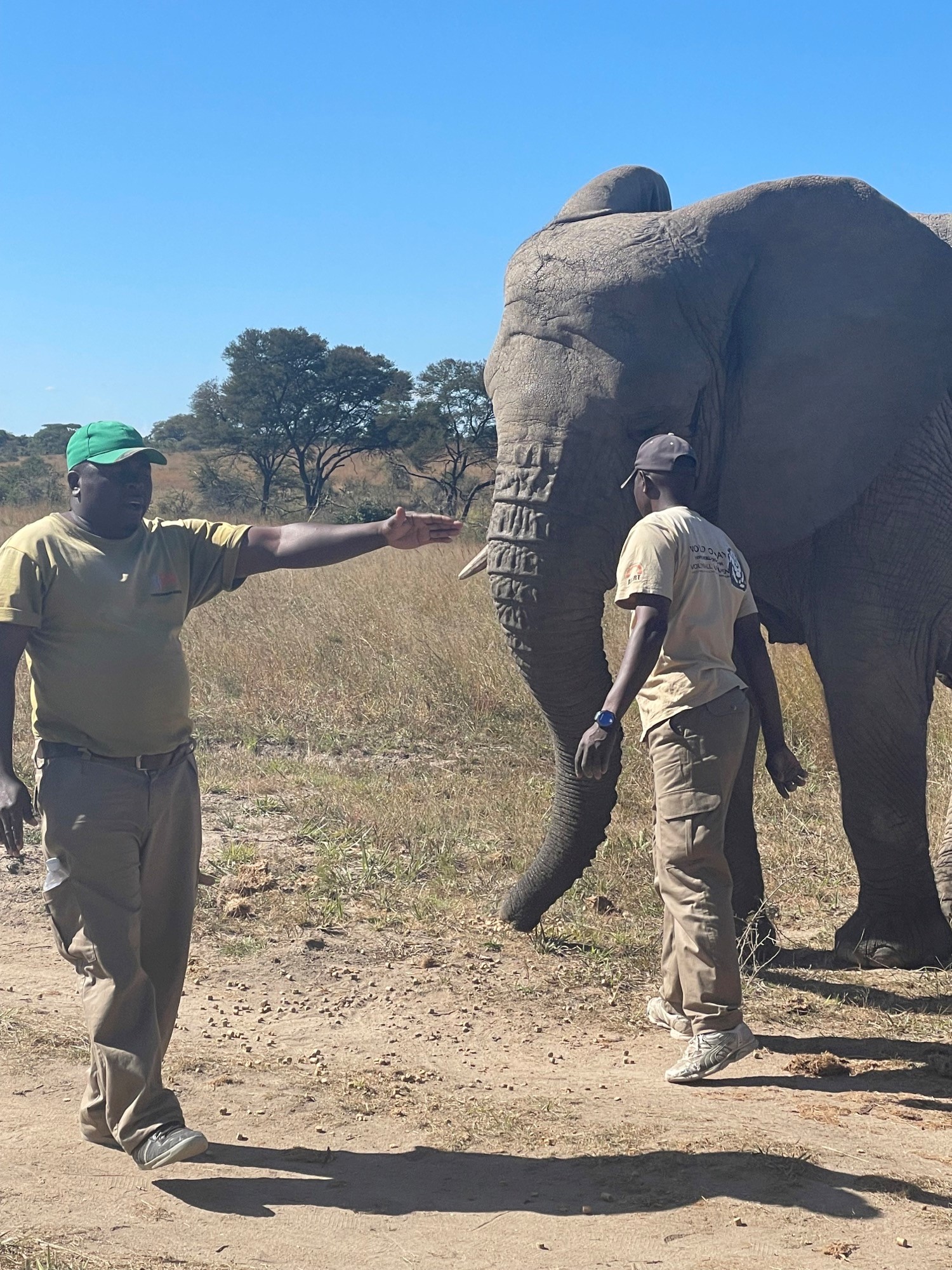
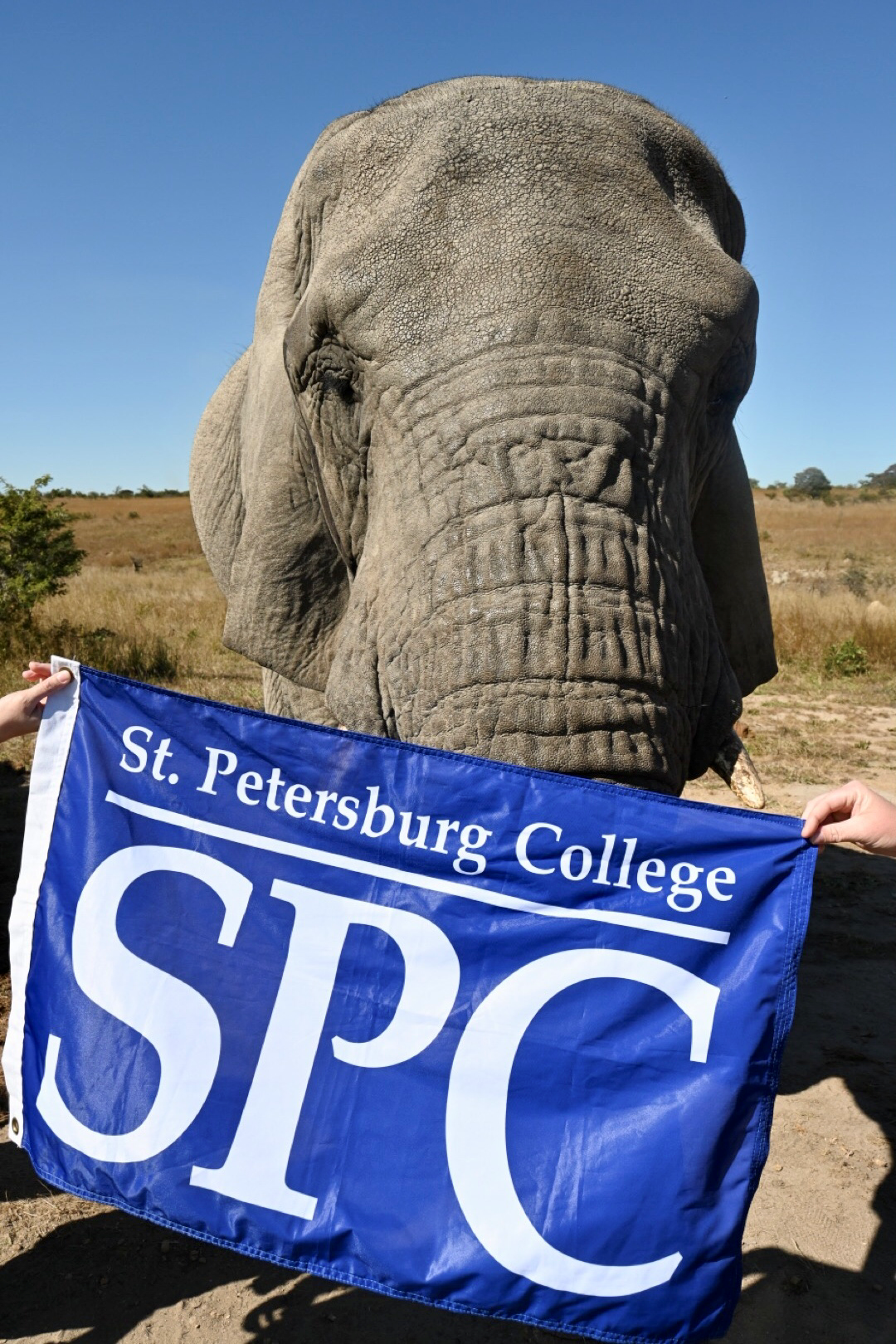
The elephant experience was out of this world as well because being able to see the elephants up close and feed/touch them was truly amazing. It was really interesting to me that one of the elephant trainers had been with the elephants for over 20 years. The oldest elephant was 35 years old so the one individual had been with them for a majority of their lives which is a special bond like nothing else. To have a relationship like that with a wild animal is incredible. After both these experiences it really opened my eyes to what else is out there and made me possibly want to do veterinary medicine for wildlife. I am very excited to see what wildlife the rest the journey brings and what else they are doing throughout Zimbabwe to help with conservational efforts. – Christine, SPC Zimbabwe Vet Tech Program, June 2022
This trip has been the most fun and enlightening trip I’ve been on yet. I have never traveled out of the country before so I was very nervous to come but I am so glad I did. I have learned so much about the different cultures and tribes here and have been able to diversify my knowledge about foreign cultures. The people are very opening and want to know all about what life is like in the states and it’s so beautiful to make connections with them. The animals were also an amazing aspect of this trip. We were able to learn about conservation straight from the sources and learn why they have certain feelings and ways of doing things. I can’t wait to come back here as Africa is one of a kind. You truly can’t meet people and have a closed mind. This trip has also taught me to be grateful for everything we have in the US. We have electric all the time, hot water, clean drinking water, healthcare, and support. – Jaida , SPC Zimbabwe Vet Tech Program, June 2022
I was unsure what I was expecting when I first signed up for the trip. I knew there would be cultural differences, I just wasn’t prepared for what they would be. This is the first time I’ve been on a plane, and I went 36 hours around the world. When landing in Africa, the landscape was gorgeous. Not what I was expecting in the slightest. We visited the University of Zimbabwe and learned about their Veterinary Science program. This was a big shock to me as I was surprised by what they actually had available to them, but how far behind in times they were compared to what we have available in the States. Everyone was very friendly and dressed professionally which is the opposite of what we experience back at home. From there we went to Antelope Park and saw a lot of wild animals. On the first day we got up close to Giraffes and Zebras. We were 10 feet away! We saw some tamed Elephants, though they are still considered wild. The experience thus far has been beyond what I can put into words. – Megan , SPC Zimbabwe Vet Tech Program, June 2022
Africa is one of the places most people never get the chance to step foot in during their lifetime. When we had this opportunity to go especially for our veterinary technology program I was all on board. This was my first time out of the USA and I was definitely taken back by how different other parts of the world are. The people here were one of the most welcoming and friendly I have ever met, making this experience exceptionally great. I was convinced, like many of my other classmates, that we would not enjoy some of our food options since we can be very picky. I think I ate more here than I do back home and I am dreading having to go back to our home food. It is hard to pick out a favorite activity we did when everything was just life changing and amazing. Seeing animals in their natural environments and so close to us sparks a joy in you like nothing else. Getting to help work hands on with hyenas helping them move to a new enclosure and get base line lab work was amazing to be experience. Touching and feeding elephants was another awesome interaction.
We learned so much about human animal conflict and now understand why their wildlife can be such a problem for them. I was still able to learn so many thing about animals while on this trip from our guide and will be taking that knowledge home with me. Getting to visit their veterinary university and interact with students was also eye opening because they didn’t have many of the resources we have in the states. Driving around the whole country you can see the difference in city life versus rural Africa and it was an experience to see how life treats them and their day to day differences. I went into this trip excited to just see animals and happy where I was in my life at the time. Coming out, I have learned my real passion is to work with wildlife/conservation and I couldn’t be happier. If you have a chance to do a study abroad it is very much worth it and life changing to experience other cultures and ways of life. -Katelyn, SPC Zimbabwe Vet Tech Program, June 2022
This study abroad trip to Zimbabwe has been a once in a lifetime experience. Full of amazing sights, cross cultural experiences, and new and different foods. One thing that has stuck out to me during this time is the time we spent in the local craft market. It was quite a cultural experience. It was very overwhelming between the sheer number of items to look at in a small space, and all of the shop owners pulling you in to try and sell to you. They would try to relate to you by calling us “sister”, some tried to use our compassion to make us buy saying “no one has bought from me in days”. The haggling for a better price on the handmade items was something I have never experienced before, and was certainly not good at, though I did try. All I wanted was to end it fast so I could run to the bus and be done. Having the shop owners ask for trades instead of money was also interesting. They were asking for my (very cheap) hat or sunglasses or water bottle in trade instead of money for some of the beautiful works of art they had on display. One even kept asking for my hair tie. Some students they even asked for their socks and old shoes. This was extremely odd to me, as their work is worth so much more than the value of the items they were asking for. As it did not seem fair (and there were some items i was not willing to part with), I did not end up trading anything, but watching the other students trade was fascinating. The cultural aspect of the market in Zimbabwe was so different from anything in the United States that it is something I will remember for a long time to come. – Bridgette , SPC Zimbabwe Vet Tech Program, June 2022
The cultural aspect of the market in Zimbabwe was so different from anything in the United States that it is something I will remember for a long time to come.
Wildlife medicine was never something I really thought about before this encounter. I never understood what mechanisms, equipment, supplies, and people are needed to preform necessary procedures on these animals to provide proper care for their overall health and well-being. For many, not much is known about treatments, handling, or care. While deworming and dipping these large cats, I observed their behavior.
The deworm consisted of 5 ml bremamectin injected into a 2×4 cm^2 piece of antelope.
While approaching the cage, the 4 subject lions became slightly aggressive. The difficulty of getting each lion to obtain the dewormer called for multiple employees distracting other lions, funneling the correct lions into the desired cage and position, and correctly distributing the dewormer into each lion separately.
This technique demonstrated many difficulties wildlife veterinary care teams face. Some of these difficulties include ensuring an adequate amount of dewormer in each lion, maintaining human and lion safety, and even correctly recording which lion received the dewormer and at what time.
Firstly, it was extremely difficult to inject bremamectin into the cow meat. After drawing up 5ml and placing the needles into the meat, it was very difficult to inject all of the solution without any leaking from the piece of meat. This technique unfortunately allows great room for human error if the person injecting the solution doesn’t notice if there is any leakage.
Secondly, maintaining human and lion safety did not come easy. One person was designated to distract the non-subject lion with a non-injected piece of meat. This lead to lions fighting for dominance, approaching the cage, and for humans, getting close enough to the cage to distract them.
Lastly, it was difficult to record which lion received the dewormer as they are constantly moving throughout the cage. Confirmation between the workers, which consisted of calling out the names of the subject lions when the dewormer was given, increased the accuracy of the data.
As hectic as this process may seem as a veterinary student with little to no wildlife experience, this treatment was done relatively quickly with the help of the veterinary students and the smaller subject lions. With many eyes on the subject lions, it seemed as though there was less room for error while recording data and ensuring each lion was dewormed. I enjoyed learning about this process in antelope park as it is a common treatment lions in captivity receive. I do hope to learn about the differences between antelope park’s treatment plan versus other facilities and expand my knowledge on deworming wildlife. – Brianna , SPC Zimbabwe Vet Tech Program, June 2022